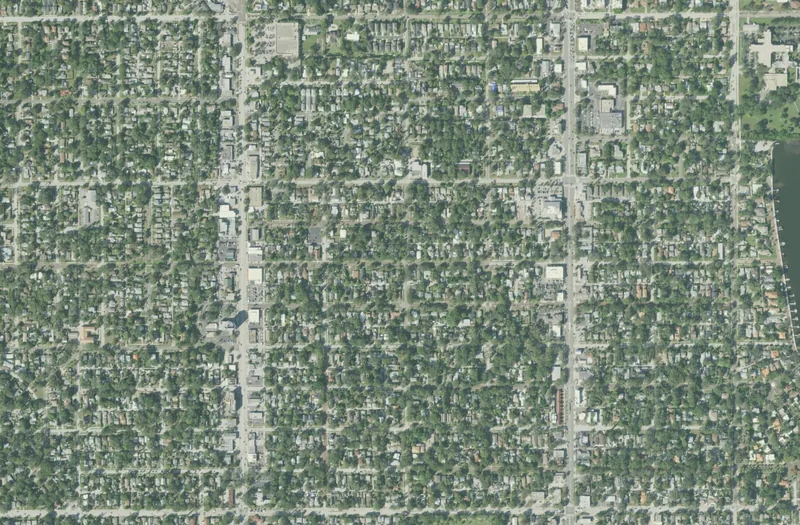
This guide concerns the named neighborhood in St. Petersburg. Association, historic, school, postal and property boundaries can differ; check an exact address with the responsible authority.
Get to know Crescent Heights
Crescent Heights is a named St. Petersburg neighborhood with its own association and a compact residential street grid. It is distinct from Crescent Lake, the neighborhood and public park immediately to the south. That relationship makes a combined outing practical to investigate, but it should not erase the separate place names. Start with a manageable walk and use the association’s history to give the streets context, then test one everyday journey beyond the residential blocks.
Choose a short public-street loop in Crescent Heights rather than a tour of private interiors. The association and city records offer the starting geography; its commonly described edges run around 22nd to 30th Avenues North and between 4th Street North and Dr. Martin Luther King Jr. Street North. If you add Crescent Lake Park, save it as a separate nearby stop and check current recreation notices before relying on a specific court or activity.
Start with these local connections
- A grove-to-neighborhood history
- The nearby lake is a separate destination
- Commercial edges change the character of a trip
- Use community and school contacts for different questions
A grove-to-neighborhood history
The association traces Crescent Heights to an orange-grove setting in the 1920s and links a January 2000 neighborhood plan describing development over several decades. That is useful context for noticing how different homes and streets fit together, not a guarantee about the construction date or historic designation of a particular property. Keep individual building questions with city preservation or permit records. A simple walk can focus on street form, tree cover and the relationship between homes and the commercial edges without turning residents’ yards into attractions.
The nearby lake is a separate destination
Crescent Lake Park adds a public recreation option to the south. The city lists walking routes, a playground, sports facilities and a teen-technology center there. On the November 14 review, the park page still posts a tennis-court closure, so verify current court availability before making that your purpose. A maintenance notice mentioning June also remains on the page; do not turn that old date into a new November closure claim. Walking, a booked activity and a special event each deserve their own current check.
Commercial edges change the character of a trip
Fourth Street North and Dr. Martin Luther King Jr. Street North help orient the neighborhood, but they are not interchangeable walking experiences with the residential blocks between them. Choose your actual shop, service or food destination and inspect the crossing and entrance you would use. PSTA can help compare a transit trip on the wider street network; verify the stop, direction and last leg. Looking at a straight line on a map is less useful than checking a route that you can comfortably reverse.
Use community and school contacts for different questions
The current association welcomes both renters and homeowners into neighborhood participation. Its calendar is a useful starting point for a gathering, while the municipal source handles city services. Woodlawn Elementary’s district site is a nearby school-family resource to investigate, not an assignment for every Crescent Heights address. Check the home address and school year first, then ask the relevant school about enrollment, transport and participation. A neighborhood meeting, school event and public park visit have separate entry rules and should not be treated as open access to each other.
A working landmark offers another piece of context
Fire Station 4 on 4th Street North is another local service landmark: the official fire history dates its original construction to 1947. It serves several named neighborhoods, including Crescent Heights. That broad service relationship does not define a residential boundary, and the station’s vehicle bays must remain clear. For a first visit, combine the historical context with a practical task such as finding your bus stop, making a school inquiry or locating the city contact for an address. Those checks reveal more than a neighborhood label alone.
Neighborhood questions
Is Crescent Heights the same as Crescent Lake?
No. This guide preserves the separate neighborhood identities. Crescent Lake Park is a nearby destination to the south.
Can I plan on using the Crescent Lake tennis courts?
The city page still posts a closure on the November 14 review. Check directly before a court visit.
Do association boundaries determine school or city-council assignments?
No. Use the appropriate official address-based lookup for each question.
Schools, civic contacts & everyday resources
Use your full street address for school and electoral questions. A city name, neighborhood label or nearby landmark does not establish the assignment for every home.
Official resource paths reviewed 2026-11-14. No household school or representative assignment is asserted here.
Find your bearings
Crescent Lake Park — separate nearby reference is the orientation point on this map. The marker identifies one place; it does not draw the neighborhood, school zone or property boundary.
This separate public park lies south of Crescent Heights and is a nearby orientation reference, not its boundary. Check current court restrictions.
Show the orientation map
Open a larger map ↗ · Official location source ↗ · Map data © OpenStreetMap contributors
Local information reviewed 2026-11-14. Photograph date and rights are recorded separately.
Useful reading
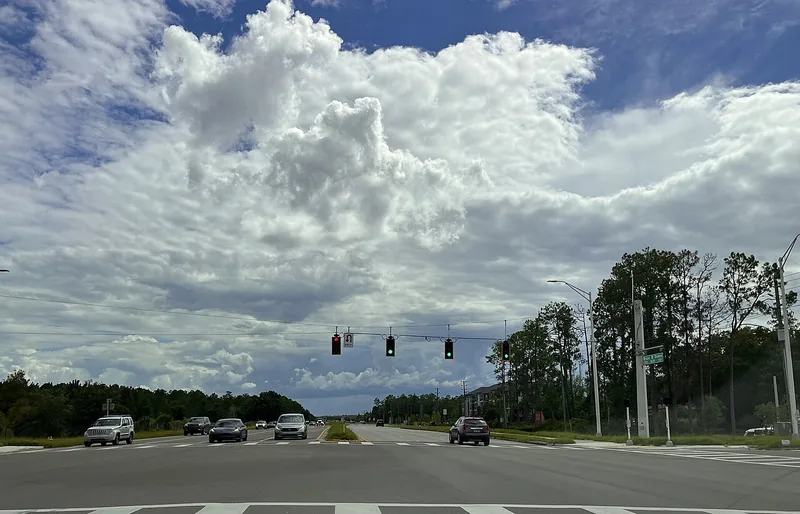
Choosing a Tampa Bay neighborhood: questions a listing cannot answer
Separate the place name from the address, then compare the everyday journeys and services that matter to you.
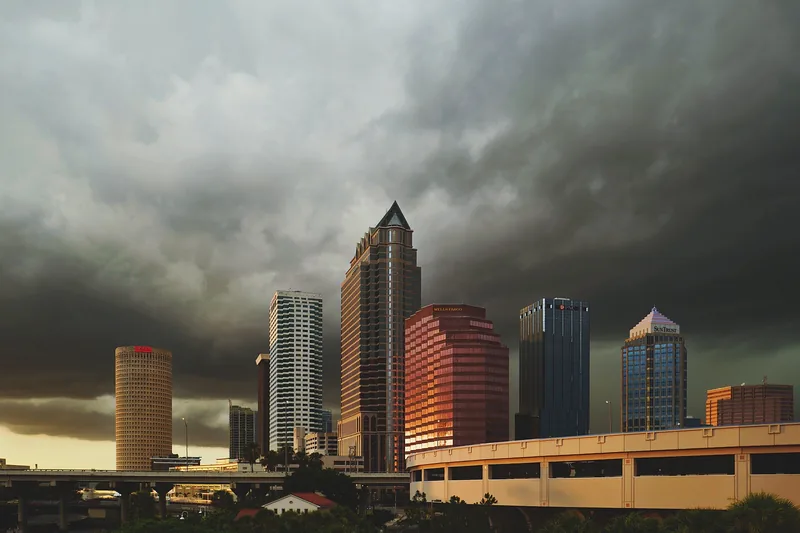
Getting around Tampa Bay: plan the actual journey
Match your destination to the right transport system and check both directions before committing to a day out.
Local sources & practical next steps
- City of St. Petersburg — exact neighborhood association record ↗
- Home - Crescent Heights Neighborhood Association ↗
- History - Crescent Heights Neighborhood Association ↗
- Crescent Lake Park ↗
- St. Pete Fire Rescue ↗
- Home - Woodlawn Elementary ↗
- School Zone Locator | Pinellas County Schools ↗
- Schedules & Maps | Bus Routes in Pinellas County | PSTA ↗
- Pinellas County Board of County Commissioners - Pinellas County ↗
Use current city, county and operator information for an exact address, opening hours, service access and event details.